
Otoplasty Surgery to Correct Natural Ear
Otoplasty corrects prominent or asymmetric ears naturally and discreetly. Balanced results, minimal scarring and improved facial harmony.
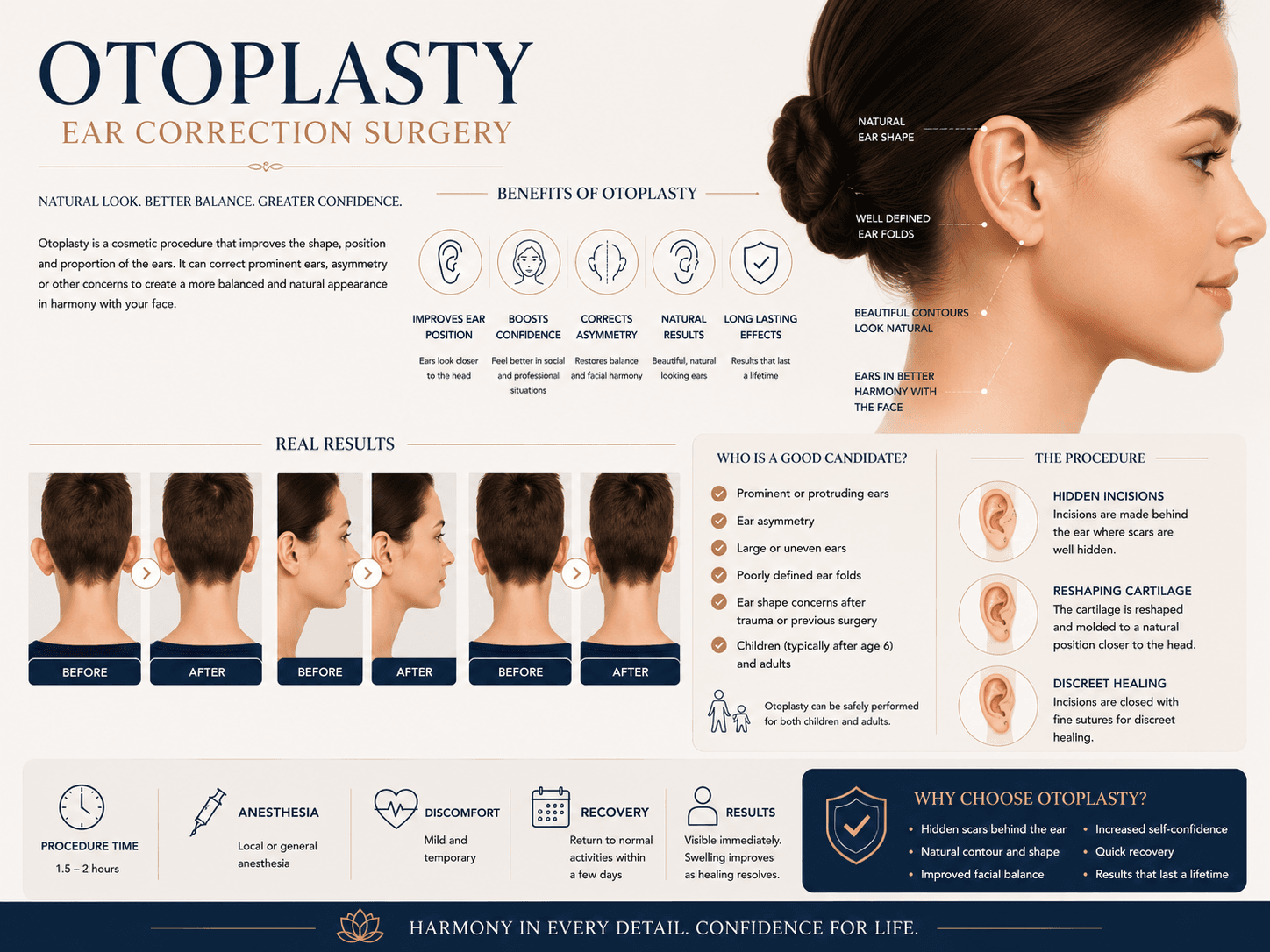
Otoplasty is ear correction surgery. It improves the shape, position and proportion of the ears. The goal is not an artificial appearance. It is natural balance between the ears and the face.
What Is Otoplasty?
Otoplasty is a cosmetic procedure. It reshapes and repositions the ears. It is commonly performed for prominent ears, asymmetry or ears that appear too large relative to the face.
Small changes in ear position can:
Greatly improve facial harmony
Boost self-confidence
Create a more balanced and natural appearance
What Can Otoplasty Correct?
The procedure suits patients with:
Prominent or large ears
Unequal or asymmetric ears
Poorly formed ear folds
Ear shape issues after trauma or previous surgery
Ears that do not harmonise with the face
How Does the Procedure Work?
Modern otoplasty reshapes the cartilage. It brings the ears closer to the head. The result looks natural — not operated.
Incisions are placed behind the ear. Scars are subtle and difficult to see. Practically invisible after healing.
Who Can Have Otoplasty?
The procedure can be performed on adults and children. It depends on:
Individual anatomy
Degree of ear prominence
Emotional readiness of the child
Patient goals and expectations
A detailed consultation is essential for every case.
The Principle of Naturalness
Symmetry and avoiding overcorrection are essential. A well-operated ear looks natural. It does not look modified or artificial.
The ideal result is an ear that is:
Naturally proportioned
Balanced with the opposite ear
In harmony with the entire face
Free of visible signs of surgery
Recovery
Recovery is generally easy and well-tolerated:
Mild swelling and discomfort for the first 1–2 weeks
A protective bandage worn for the first few days
Return to normal activities after 1–2 weeks
Final results visible after 4–6 weeks
Conclusion
Otoplasty remains one of the most effective procedures in contemporary plastic surgery. It improves self-confidence. It enhances facial harmony. It delivers natural results with minimal evidence of surgery.
FAQ — Otoplasty
What is otoplasty? It is ear correction surgery. It improves the shape, position and proportion of the ears for natural harmony with the face.
What problems can otoplasty correct? Prominent ears, asymmetry, poorly formed ear folds and ear shape issues after trauma or previous surgery.
How is the procedure performed? The surgeon reshapes the cartilage and repositions the ears closer to the head. Incisions are placed behind the ear — subtle and difficult to see.
Will there be visible scars? Scars are placed behind the ear. They are subtle and difficult to see. They become practically invisible after healing.
At what age can otoplasty be performed? It can be performed on adults and children. It depends on individual anatomy and emotional readiness of the child. A detailed consultation is essential.
How long is recovery? Swelling resolves within 1–2 weeks. Normal activities resume after 1–2 weeks. Final results are visible after 4–6 weeks.
Are results natural-looking? Yes. The goal is natural harmony — not a modified or artificial appearance. Symmetry and avoiding overcorrection are essential principles.
Is otoplasty safe? Yes. It is a well-established procedure with minimal risk. Risks are clearly explained during the consultation.
Can the procedure be repeated? In rare cases, a minor revision may be needed. This is discussed in detail with the surgeon during consultation.
Who is the ideal candidate? Patients with prominent, asymmetric or poorly formed ears who want natural and discreet correction for better facial harmony and improved self-confidence.
About the author
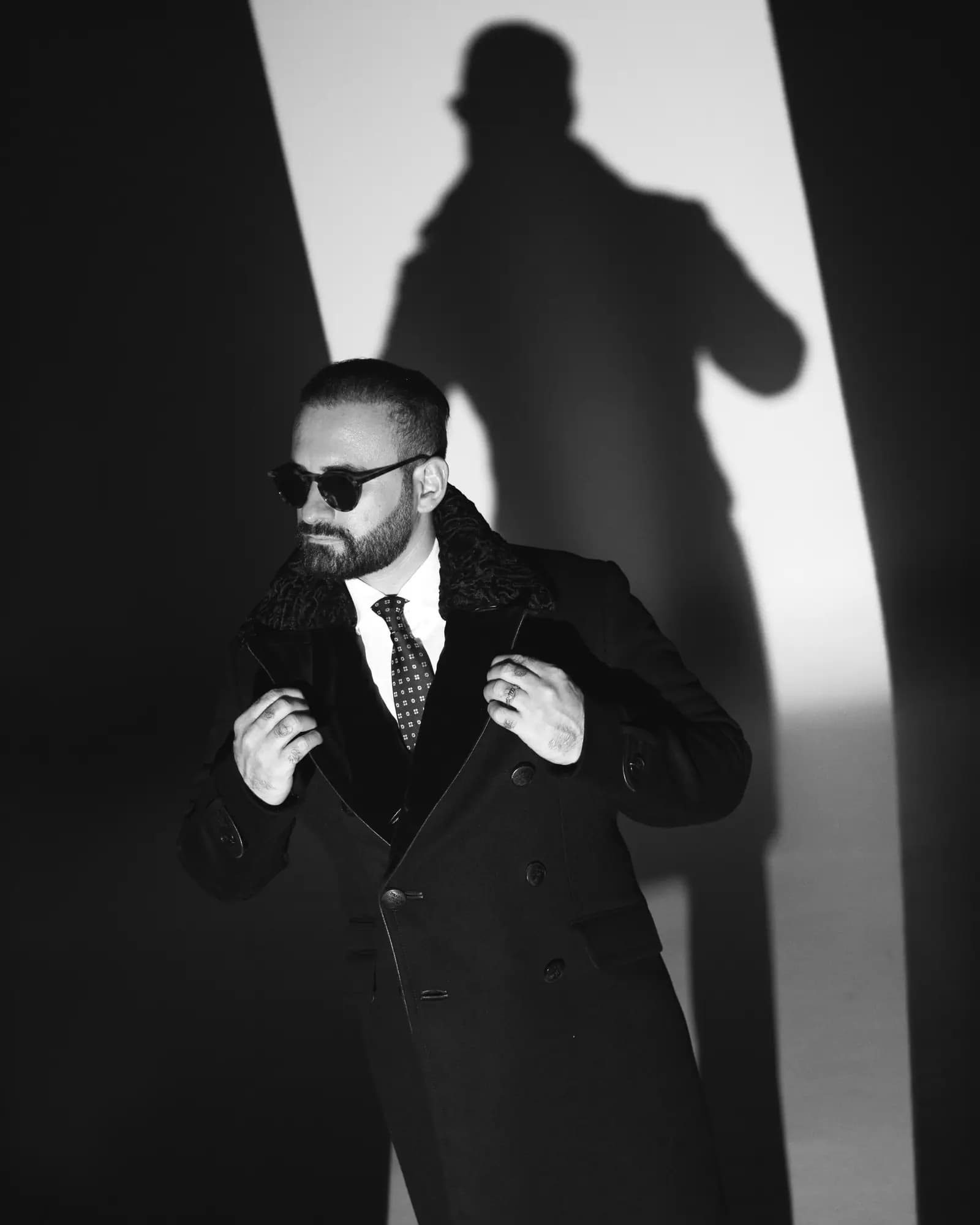
Dr. Mubariz Mammadli
Plastic surgeon
Dr. Mubariz Mammadli offers advanced plastic surgery and aesthetic treatments in Bucharest, Naples and Baku, with a refined, patient-first approach.
View full profileWant a tailored opinion? Schedule a discreet consultation with Dr. Mubariz Mammadli.
Related reading
Aesthetic medicine blog
Education
Defined Neck Contour Platysmaplasty
Platysmaplasty defines neck contour and improves jawline definition. Natural results, firmer neck and more youthful lower face profile.
Education
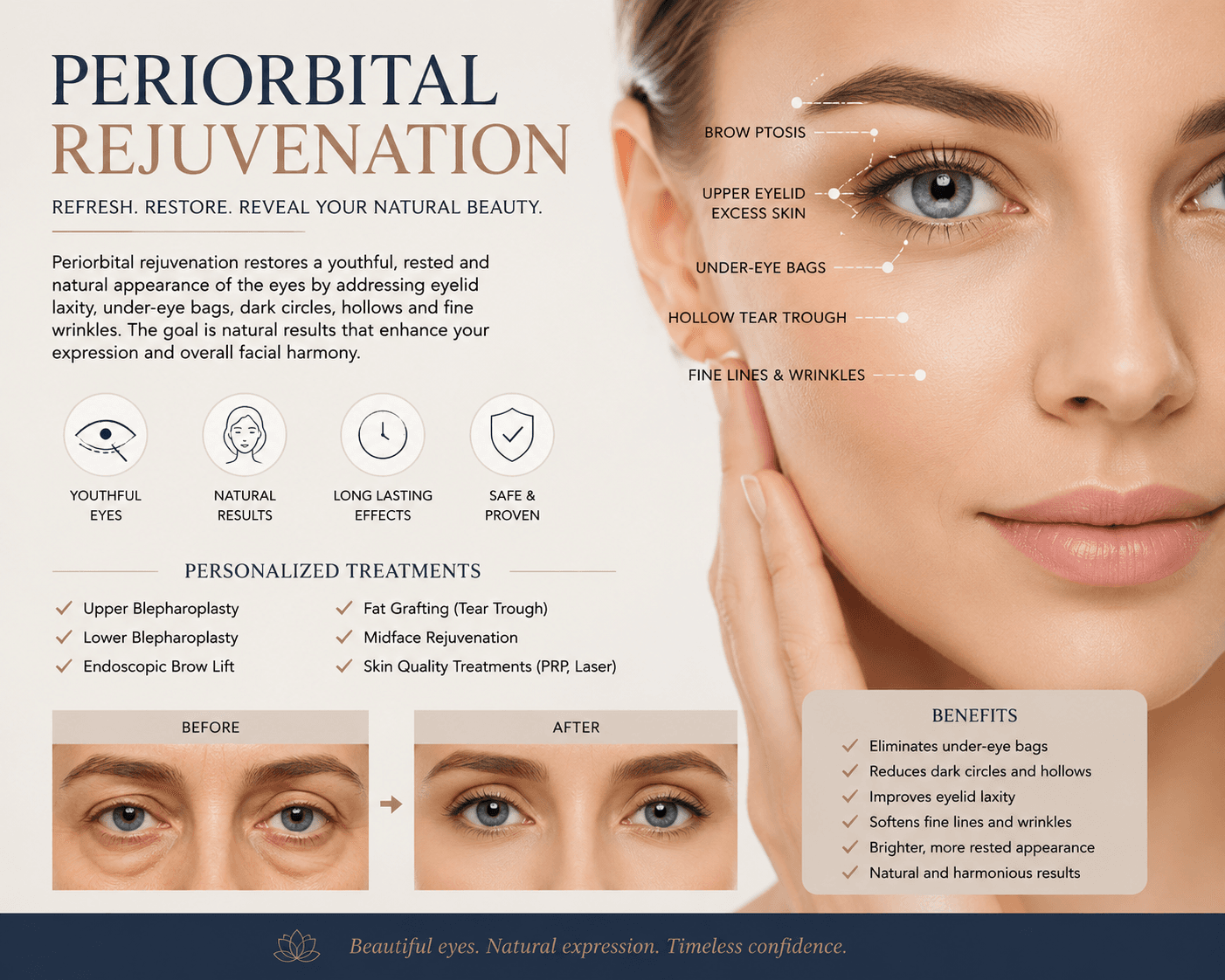
Periorbital Rejuvenation Techniques for Youthful Natural Eyes
Periorbital rejuvenation restores youthful, natural eyes. Blepharoplasty, fat grafting and brow lift for brighter, more harmonious appearance.
Education
What is a plastic surgeon? What do they do?
Discover what a plastic surgeon does, what procedures they perform and how to choose the right specialist. Natural results, safety and expertise — all in one guide.