
Risks in Aesthetic Surgery What You Need to Know
Risks in aesthetic surgery complete guide on complications, risk factors and how to minimise them for safe and satisfying surgical results.

Risks in Aesthetic Surgery What You Need to Know
Every surgical procedure involves risks. Aesthetic surgery is no exception. An informed patient is a prepared patient. Understanding real risks not exaggerated, not minimised helps you make responsible decisions and recognise warning signs in time.
Why Is It Important to Know the Risks?
An honest surgeon presents risks clearly, without exaggerating or minimising them. This is an essential part of informed consent.
Knowing the risks helps you:
Make an informed and responsible decision
Recognise warning signs in time
Understand what is normal and what is not during recovery
Communicate effectively with your surgeon if problems arise
Set realistic expectations
General Risks of Aesthetic Surgery
All surgical interventions, regardless of type, carry certain common risks:
Anaesthesia-related risks
Allergic reactions
Respiratory problems
Cardiovascular complications
Postoperative nausea and vomiting
Temporary confusion
These risks are minimised through careful pre-anaesthetic assessment and continuous monitoring.
Infection
Any surgical incision carries an infection risk. Signs include:
Increased redness
Local warmth
Abnormal discharge
Fever
Increasing pain instead of improving
Prophylactic antibiotics and proper hygiene significantly reduce this risk.
Bleeding and Haematoma
Excessive bleeding can cause haematomas blood accumulations under the skin. May require surgical drainage.
Abnormal Scarring
Scars can become:
Hypertrophic -thick and raised
Keloid -growing beyond incision margins
Discoloured - darker or lighter than surrounding skin
Venous Thromboembolism
Blood clots can form in veins, usually in the legs. They can migrate to the lungs -pulmonary embolism, a serious and potentially fatal complication.
Tissue Necrosis
Insufficient blood supply can cause tissue death. More common in smokers or with excessive tension on tissues.
Procedure-Specific Risks
Facelift
Facial nerve injury temporary or permanent facial muscle paralysis
Asymmetry
Hair loss around incisions
Visible scarring
Skin flap necrosis
Blepharoplasty
Ectropion -eyelid turning outward
Dry eye or eye irritation
Eyelid asymmetry
Temporary double vision
Rare corneal injury
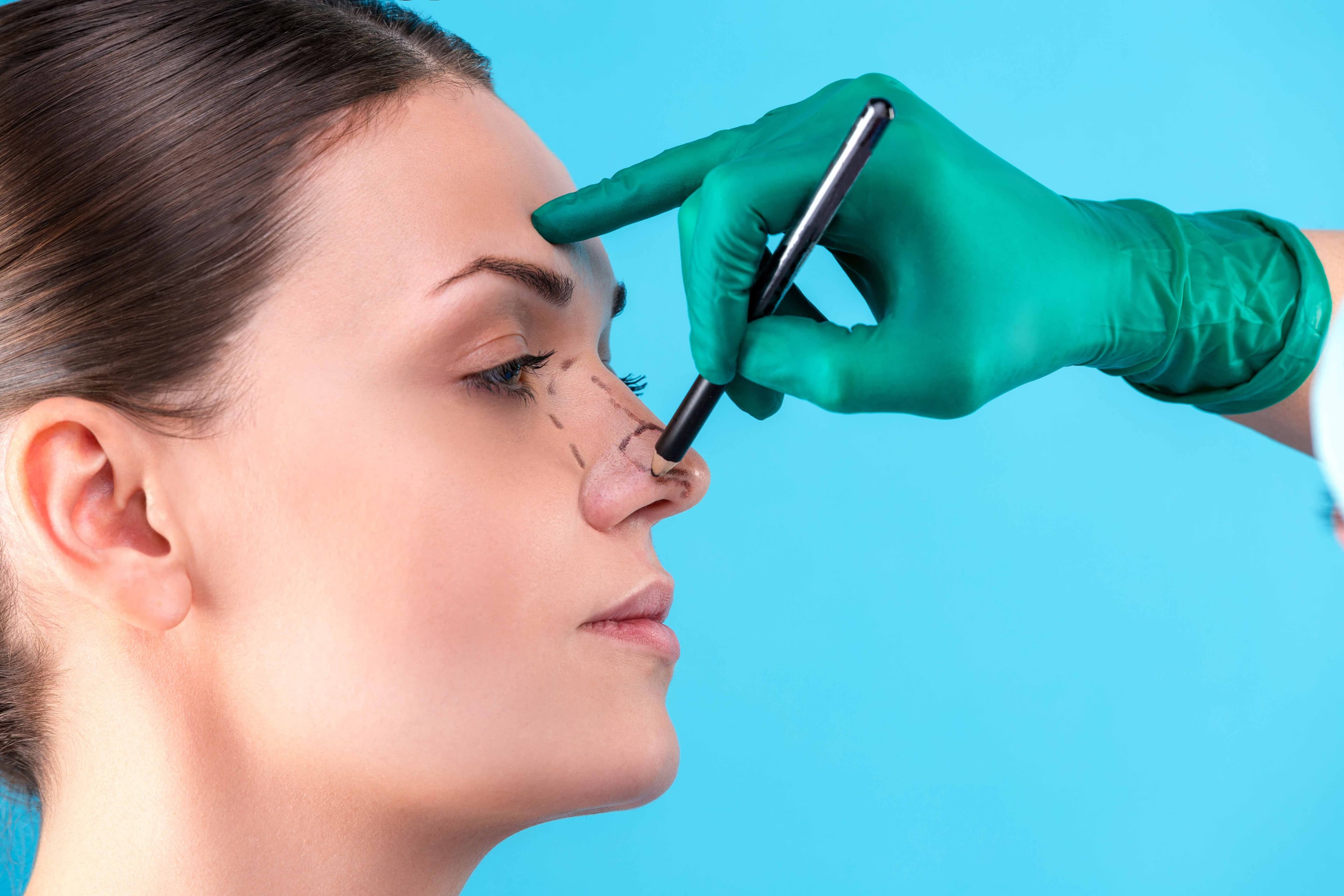
Rhinoplasty
Breathing difficulties
Nasal asymmetry
Septal perforation
Need for revision surgery
Sensitivity changes
Breast Augmentation
Capsular contracture - hardening of tissue around the implant
Implant rupture
Asymmetry
Nipple sensitivity changes
Need for implant replacement over time
Liposuction and Abdominoplasty
Irregular contour
Asymmetry
Seromas
Sensitivity changes
Deep vein thrombosis
Neck Lift and Platysmaplasty
Lower facial nerve injury -affecting lower lip movement
Asymmetry
Visible scarring under the chin or behind the ears
Factors Influencing Risk
The risk of complications is not the same for every patient. Important factors include:
Smoking. Dramatically increases the risk of complications tissue necrosis, infection, poor healing.
Age and General Health. Older patients or those with chronic conditions face higher risks.
Diabetes. Affects healing and increases infection risk.
Obesity. Increases the risk of complications in most surgical procedures.
Bleeding Disorders. Increase the risk of bleeding or thrombosis.
Surgeon's Experience. An experienced surgeon significantly reduces complication risk through precise technique and careful planning.
Clinic and Safety Standards. Accredited clinics with strict protocols provide a safer environment.
How Are Risks Minimised?
Complete Preoperative Assessment. Blood tests, cardiac evaluation, complete medical history.
Stopping Smoking. Minimum 4 weeks before and after surgery.
Choosing an Experienced Surgeon. Verify qualifications, experience and results portfolio.
Following Preoperative Instructions. Stopping certain medications, proper fasting.
Following Postoperative Care. Adhering to wound care and physical activity instructions.
Prompt Communication of Problems. Contact your surgeon immediately if unusual signs appear.
When to Contact Your Surgeon Urgently
Contact your surgeon immediately if you notice:
Fever above 38°C
Intense and increasing pain
Active uncontrolled bleeding
Severe asymmetric swelling
Signs of infection - redness, discharge, warmth
Difficulty breathing
Leg pain with swelling -possible thrombosis
Psychological Risks
Aesthetic surgery also involves psychological risks that should not be ignored:
Dissatisfaction with results, even when technically correct
Body dysmorphic disorder - distorted self-perception
Temporary postoperative depression
Unmet unrealistic expectations
A preoperative psychological consultation may be recommended in certain cases.
How Do You Choose a Surgeon Who Minimises Risks?
Verify certification and specialisation in plastic surgery
Ask about complication rates
Request a real portfolio of results
Ensure they operate in accredited clinics
Avoid surgeons who minimise or deny risks
Seek a second opinion if you have doubts
Conclusion
Aesthetic surgery involves real but manageable risks. An experienced surgeon, an accredited clinic and proper preparation significantly reduce these risks. Complete information helps you make responsible decisions and enjoy safe and satisfying results.
Want a tailored opinion? Schedule a discreet consultation with Dr. Mubariz Mammadli.
Related reading
Aesthetic medicine blog

Education
The Complete Guide to Plastic Surgery in Bucharest
A complete guide to plastic surgery in Bucharest, procedures, pricing, travel planning, and what to ask before booking.
Education
Non-Surgical Rhinoplasty: When Is It Enough?
Non-surgical rhinoplasty uses filler to smooth bumps and refine your profile temporarily, but it has real limits worth understanding.

Education
Body Contouring: Shaping the Silhouette You Want
A clear guide to body contouring surgery, liposuction, abdominoplasty, body lift and more, what each procedure does and how to choose the right one.