
Facial Rejuvenation Without Surgery Modern Options
Facial rejuvenation without surgery modern options: Botox, fillers, biostimulators, laser and HIFU. What they can achieve and where their limits lie.

Facial Rejuvenation Without Surgery Modern Options
Not everyone is ready for surgery. The good news: modern aesthetic medicine offers effective rejuvenation options without a scalpel. This guide presents the modern treatments, what they can achieve and just as important where their limits lie.
What Does Non-Surgical Rejuvenation Mean?
Non-surgical rejuvenation uses minimally invasive treatments:
Injectables botulinum toxin, fillers, biostimulators
Technologies laser, radiofrequency, ultrasound
Regenerative treatments PRP, skinboosters
No incisions. No general anaesthesia. No long recovery.
Botulinum Toxin Relaxing Wrinkles
The most popular non-surgical treatment in the world.
What it does:
Relaxes hyperactive muscles
Softens expression wrinkles
Prevents permanent wrinkle formation
Treated areas: forehead, frown lines, crow's feet.
Effect duration: 4–6 months.
Hyaluronic Acid Fillers Restoring Volume
Fillers add volume where it has been lost.
What they can do:
Restore cheek volume
Soften nasolabial folds
Contour the lips and jawline
Correct deep under-eye hollows
Duration by area:
Area Duration
Lips 6–12 months
Cheeks 12–18 months
Nasolabial folds 9–12 months
Under-eye 9–15 months
Jawline 12–18 months
Biostimulators New Collagen
Biostimulators stimulate your own collagen production.
How they work:
The injected substance activates fibroblasts
The skin produces new collagen
Firmness increases progressively
Results appear in 2–3 months
The effect is gradual and natural. Duration: 18–24 months.
PRP Platelet-Rich Plasma
PRP uses your own blood:
Blood is collected and centrifuged
Plasma concentrated in growth factors is extracted
It is injected into the skin
Benefits: improved skin quality, radiance, fine texture. Ideal for maintenance and prevention.
Skinboosters Deep Hydration
Skinboosters are microinjections of fluid hyaluronic acid.
They do not add volume. They hydrate the skin from within:
Increased radiance
Improved elasticity
Softened fine lines
Overall revitalised appearance
Typical protocol: 2–3 sessions at 4-week intervals.
Technologies Laser, Radiofrequency, Ultrasound
Fractional laser. Stimulates skin regeneration. Treats texture, pigmentation and fine lines.
Radiofrequency. Heats the deep dermis. Stimulates collagen. Gradually improved firmness.
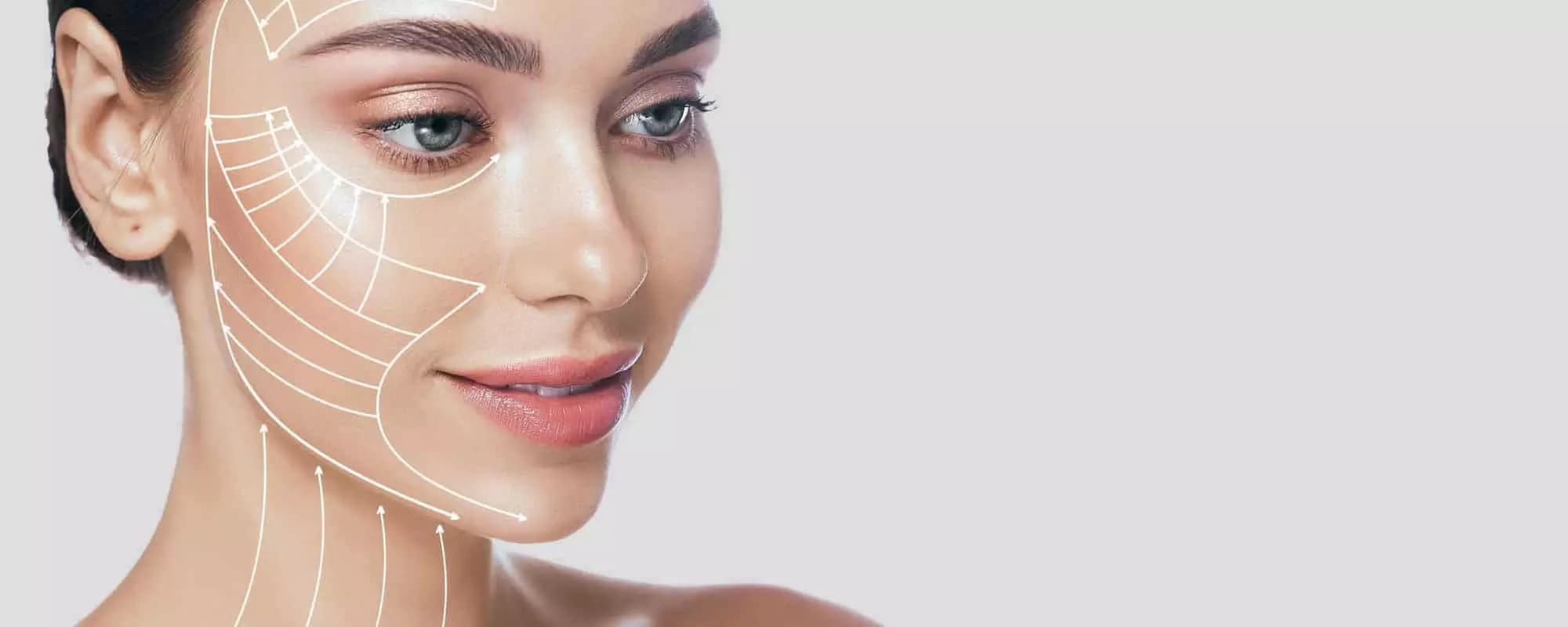
Focused ultrasound (HIFU). Reaches the SMAS layer the same layer treated surgically. A mild lifting effect, without incisions.
These technologies are frequently combined with injectables for complete results.
What Non-Surgical Rejuvenation Can Achieve
Realistic results:
Softened expression wrinkles
Restored facial volume
Firmer, more radiant skin
Subtly improved contours
A rested, revitalised appearance
For subtle changes and maintenance non-surgical options excel.
The Limits What It CANNOT Do
Honesty matters. Non-surgical treatments CANNOT:
Significantly lift sagging tissues
Remove excess skin
Correct advanced sagging of the face and neck
Reproduce the results of a facelift
For moderate-severe laxity, surgery remains the only real solution. An honest surgeon will tell you when injectables are no longer enough.
Who Is the Ideal Candidate?
For non-surgical options:
Age 25–45
Early signs of ageing
Skin with good elasticity
Desire for subtle improvements
Prevention and maintenance
For surgery:
Moderate-severe laxity
Visible excess skin
Significantly descended tissues
Desire for lasting, complete results
The Combined Approach The Smartest Strategy
The best results come from the right combination:
Ages 20–35 prevention: preventive Botox, skinboosters, SPF
Ages 35–45 non-surgical correction: fillers, biostimulators, technologies
Ages 45+ surgery when needed, plus non-surgical maintenance
Non-surgical treatments and surgery are not rivals. They are different tools for different stages.
Conclusion
Rejuvenation without surgery offers effective modern options — from botulinum toxin and fillers to advanced technologies. For early signs of ageing, results are excellent. For advanced laxity, surgery remains the standard. The key: an honest evaluation and a personalised plan.
FAQ Facial Rejuvenation Without Surgery
What is the most effective non-surgical treatment? It depends on the problem. Botox for expression wrinkles. Fillers for volume. Technologies for firmness. They are frequently combined.
How long do results last? Botox 4–6 months. Fillers 6–18 months depending on the area. Biostimulators 18–24 months.
Do the treatments hurt? Minimal discomfort. Local anaesthetics and very fine needles are used.
Is there downtime? Minimal. Most patients return to activities immediately or the next day.
Can injectables replace a facelift? No. Injectables do not lift sagging tissues or remove excess skin. For advanced laxity, surgery is the only solution.
At what age do preventive treatments start? Usually between 25 and 35 at the first signs of ageing.
Do results look natural? Yes with correct dosing and an experienced doctor. The modern philosophy: subtle and natural.
How often do I repeat treatments? Botox every 4–6 months. Fillers every 6–18 months. Technologies — usually annually.
Want a tailored opinion? Schedule a discreet consultation with Dr. Mubariz Mammadli.
Related reading
Aesthetic medicine blog
Education
The Complete Guide to Plastic Surgery in Bucharest
A complete guide to plastic surgery in Bucharest, procedures, pricing, travel planning, and what to ask before booking.
Education
Non-Surgical Rhinoplasty: When Is It Enough?
Non-surgical rhinoplasty uses filler to smooth bumps and refine your profile temporarily, but it has real limits worth understanding.

Education
Body Contouring: Shaping the Silhouette You Want
A clear guide to body contouring surgery, liposuction, abdominoplasty, body lift and more, what each procedure does and how to choose the right one.