
Lip Lift Surgery: Natural, Balanced and Defined Lips
What a lip lift changes, how proportion drives a natural result, the techniques, the scar, the recovery, and the revision rate nobody mentions.
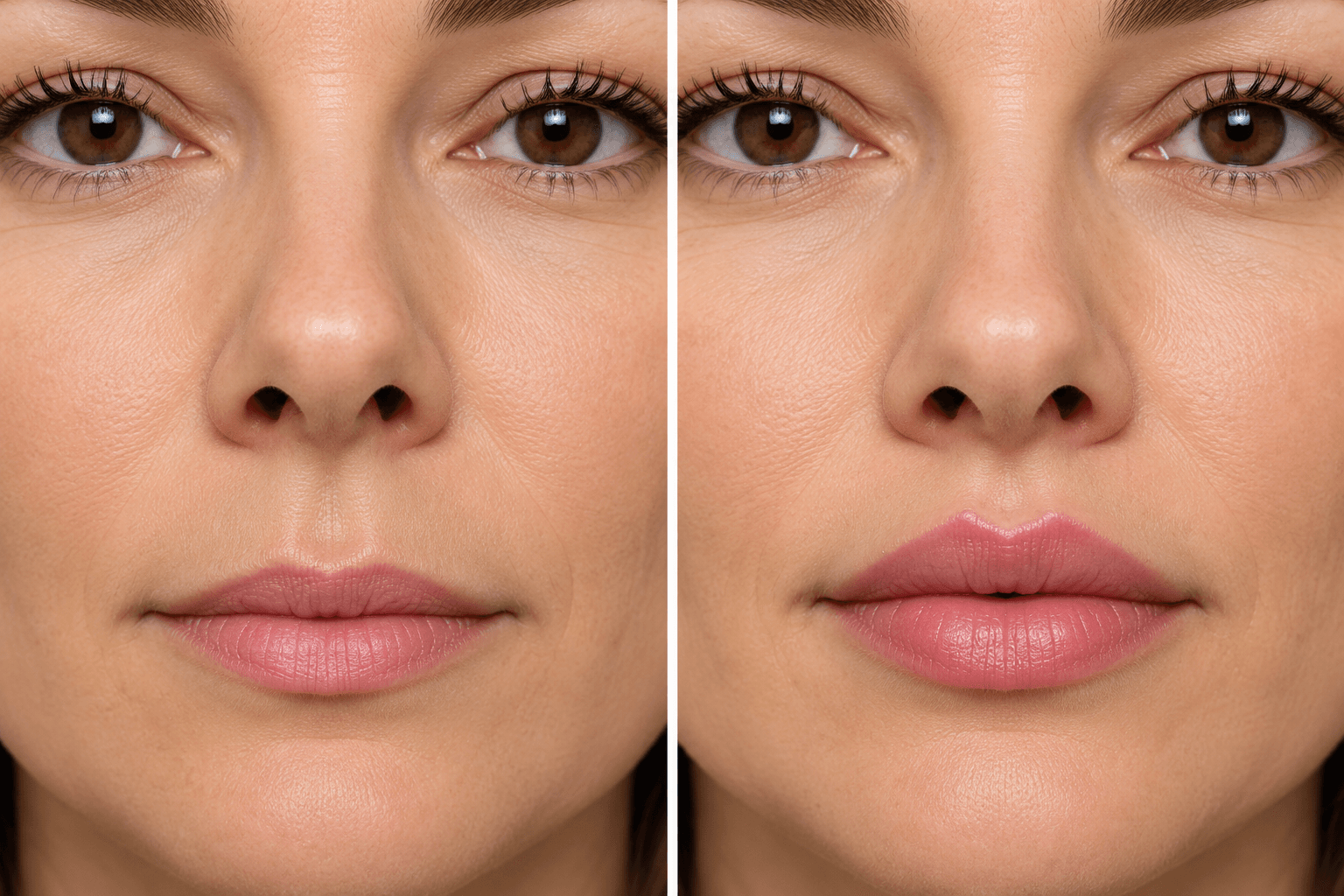
Lip Lift Surgery: How to Achieve Natural, Balanced and Defined Lips
Most people who ask about lip surgery ask for bigger lips. What they usually want, when the conversation goes a little deeper, is a mouth that looks balanced against the rest of the face: a shorter distance from nose to lip, more of the red lip visible at rest, a little tooth showing when they smile. Those are questions of proportion, not volume, and filler cannot solve them.
A lip lift addresses proportion. It is a small operation with a short recovery and a permanent effect, and that permanence is exactly why it deserves careful thinking rather than enthusiasm. The difference between a result that looks like a better version of your own mouth and one that looks obviously operated on is almost always a few millimetres decided at the planning stage.
What a Lip Lift Actually Changes
The upper lip has two parts that matter here. The philtrum is the skin between the base of the nose and the top edge of the red lip. The vermilion is the red lip itself, and how much of it you can see at rest is called vermilion show.
With age the philtrum lengthens and the vermilion thins and rolls inward. The visible effect is a longer, flatter upper lip that covers more of the upper teeth. The American Society of Plastic Surgeons describes this pattern as the upper lip lengthening with age, associated with thinning of the lip and insufficient coverage of the upper teeth.
A lip lift removes a measured strip of skin so that the philtrum becomes shorter and the red lip rolls slightly outward and upward. Nothing is added. The lip is not filled, inflated or augmented. It is repositioned, and the red lip you already have becomes more of what you see.
This is the central point and the one most often misunderstood. A lip lift makes an existing lip more visible. It does not create volume that was never there.
Why Proportion Beats Volume
The reason over-filled lips read as artificial is rarely the volume by itself. It is that volume was added to a lip whose proportions were never the problem. A long philtrum with a thin red lip, filled, becomes a long philtrum with a thick red lip. The underlying imbalance is still there and is now more conspicuous.
Correcting the proportion first often means far less volume is needed afterwards, and sometimes none at all. Patients who have been having repeat filler for years to chase an effect that filler was never going to produce are a common group in consultation.
Defined lips come from a crisp border, a visible Cupid's bow and a sensible nose-to-lip distance. Those are structural features. Volume is a separate variable, and it is best decided after the structure is right.
The Measurements That Guide the Plan
Planning is done with a ruler and a camera, not by eye alone. Four things get assessed.
Philtral length. The distance from the base of the nose to the top of the red lip. The BullHorn lip lift protocol treats a philtrum longer than roughly 15 to 18 mm as the range where a lift becomes worth discussing. Figures like these are reference points for a conversation, not thresholds that decide anything on their own.
Vermilion show. How much red lip is visible with the mouth at rest, and how it compares between upper and lower lip.
Tooth show. How much of the upper teeth appears at rest and in a relaxed smile. Reduced tooth show is one of the clearest signs that the problem is lip length rather than lip volume.
Cupid's bow and the lip border. Whether the definition is still there and simply hidden, or whether it has genuinely flattened. This changes what the operation can deliver.
The assessment also has to include the smile in motion. A lip that sits well at rest can behave differently when it moves, and a plan made from a single static photograph misses that.
Techniques, and What Each One Does
Lip lift is a category rather than one operation, and the techniques are not interchangeable.
Subnasal lip lift, also called the bullhorn
The most commonly performed version. A bullhorn-shaped strip of skin is removed at the base of the nose, following the contour of the nostrils and the nasal sill, and the lip is advanced upward. The clinic's protocol describes shortening the philtrum by 4 to 8 mm, with the design preserving Cupid's bow, and places the scar in the subnasal fold following the nostril contour.
It suits a long philtrum with reasonable vermilion still present. It is the technique that produces the clearest change in nose-to-lip distance and tooth show.
Direct lift at the vermilion border
Skin is removed immediately above the red lip border rather than under the nose. It produces a sharper border definition but places the scar at the lip edge, where it is harder to conceal. It is used selectively.
Corner lift
A small excision at the corners of the mouth, for downturned corners that persist at rest. It addresses expression at the corners and does nothing to philtral length, so the two are sometimes combined and often confused.
Lip advancement and reconstructive techniques
Where the problem is asymmetry, a thin or irregular border, scarring, or the residual effects of previous surgery, the operation becomes a reconstructive one. The lip plastic surgery and reconstruction page sets out the range, including V-Y plasty, lip advancement, Z-plasty, grafts and local flaps, chosen case by case and planned around the Cupid's bow, vermilion, philtrum and the lip-skin border.
Lip Lift or Filler?
These are not competitors. They do different things, and the honest answer in many cases is one, the other, or both in sequence.
Filler adds volume. It is non-surgical, reversible with hyaluronidase if hyaluronic acid based, and temporary, which means repeated treatment and repeated cost. It does not shorten the philtrum. Used to chase a proportional problem, it tends to produce the look people are trying to avoid.
A lip lift changes proportion. It is surgical, permanent, leaves a scar and adds no volume. It is the answer when the distance from nose to lip is the issue.
Fat grafting sits between them. Facial lipofilling uses your own fat rather than a product, and the clinic's page notes that roughly 60 to 80 per cent of transferred fat stays integrated and that lipofilling can be combined with a BullHorn lip lift.
A reasonable sequence for someone with both a long philtrum and genuinely thin lips is the lift first, then an honest look at whether volume is still wanted once the proportion is corrected. Quite often less is needed than expected.
Who Is a Good Candidate
The clinic's protocol points to patients with a long philtrum, a thin upper lip, a flat vermilion, or reduced tooth show when smiling, in good general health and with realistic expectations. It also names a specific group: people who want a permanent result rather than repeated filler appointments.
Beyond the anatomy, two things matter. The first is understanding what the operation does, because a patient who wants volume and receives proportion will be disappointed by a technically good result. The second is accepting a scar in a visible area, which is covered honestly below.
When a Lip Lift Is the Wrong Choice
This section matters more than the previous one.
A short philtrum. If the nose-to-lip distance is already short, shortening it further produces a mouth that looks strained and a nasal base that looks crowded. There is nothing to gain and the change cannot be reversed.
Volume is the real complaint. If the philtrum measures normally and the lips are simply thin, a lift will not deliver what the patient is asking for.
Significant scarring tendency. The scar sits under the nose, and someone with a history of hypertrophic or keloid scarring is accepting a higher risk in a location that is not easy to hide.
Active smoking. Nicotine impairs wound healing, and this is an operation whose entire result depends on how a small scar heals.
Unclear motivation or expectations set by images. A result that mimics someone else's mouth on someone else's face is not a natural result.
How the Procedure Is Performed
The design is drawn before anything is numbed, with the patient upright, because lip position changes when lying down. The amount of skin to be removed is decided at this point and this is the decision that determines the result.
The clinic's protocol describes the subnasal lip lift as taking 45 to 60 minutes under local anaesthesia with light sedation. The strip of skin is excised along the planned bullhorn outline at the base of the nose, the lip is advanced, and closure is done in layers so that the tension sits in the deeper tissue rather than on the skin edge. That detail matters for the scar: a skin edge under tension widens.
Asymmetry, where present, is managed by removing slightly different amounts on each side rather than by taking more overall.
Recovery
Recovery is short by surgical standards, which is one of the reasons the operation is popular.
The clinic's protocol describes swelling and bruising in the subnasal area for 5 to 7 days, with sutures removed at 5 to 6 days and a return to social activity at 7 to 10 days. The final result becomes apparent at 6 to 8 weeks, once the swelling has fully gone and the lip has settled into position.
Expect the upper lip to feel tight and look over-corrected in the first week. That is normal and it is the reason judging the result early is unhelpful. Eating and speaking are mildly awkward for a few days, and wide mouth movements are worth limiting while the closure is fresh.
Sun protection is not optional and it is not brief. The protocol calls for strict sun protection for 6 months while the scar matures.
The Scar, Honestly
Every lip lift leaves a scar. It sits at the base of the nose, in the subnasal fold, following the nostril contour. Well placed and well healed it becomes difficult to see in normal lighting, and the clinic's protocol describes it as practically invisible in normal light at 6 to 12 months.
Three things are worth stating plainly alongside that.
It is a visible location. Unlike a facelift scar hidden in the hairline, this one is on the front of the face. It is small and well concealed by the natural shadow under the nose, but it is not hidden.
Healing varies between people, and it is the single biggest variable in whether the result looks good. The surgical plan can be perfect and the scar can still heal less well than hoped.
Scar quality is the most common reason lip lifts need revising, which is covered next.
Risks, and the Revision Rate
Most published material on lip lifts is quiet about revision. It is worth being specific, because it changes how you weigh the decision.
A 22-year series of 166 lip lifts by John E. Gatti, MD, presented at Plastic Surgery The Meeting, the annual conference of the American Society of Plastic Surgeons, reported that 42 of the 166 patients, around 26 per cent, required revision. Scar irregularities were the most common reason. Of those revisions, 30 were corrected with basic cautery, 10 needed direct removal of the irregularity, and 8 had a second lip lift. The series described the scar irregularities as relatively minor, and the majority of patients reported subjective improvement in facial aesthetics.
Read that carefully rather than as a reason to decline. Roughly a quarter of patients needed something further, most of it minor and office-based. That is a meaningful rate for a small operation, and it is the kind of figure you should know before rather than after. Note also that this is a single surgeon's series presented at a conference rather than a pooled analysis, so treat it as a useful benchmark rather than a universal rate.
The other risks worth understanding: asymmetry, a widened or raised scar, altered sensation around the incision, distortion of the nostril base if the design is poor, prolonged swelling, and infection. Over-shortening deserves its own section.
Over-Shortening: The Mistake That Cannot Be Undone
Skin that has been removed does not come back.
Filler can be dissolved. A thread can be removed. A lip lift that has taken too much skin leaves a philtrum that is permanently too short, a nasal base that looks pulled, teeth that show at rest in a way that reads as a grimace, and a mouth that struggles to close comfortably. Correcting it means grafting skin into the area, which trades one problem for a worse scar.
This is the reason conservative measurement matters more than technique. The published shortening range for the subnasal approach is 4 to 8 mm, and the lower half of that range is where most natural results live. A surgeon declining to take as much as a patient asks for is usually protecting the result.
If you take one thing from this article, take this: ask your surgeon how many millimetres they plan to remove and why that number. A clear answer is a good sign.
Sequencing With Rhinoplasty and Other Procedures
The subnasal incision sits at the base of the nose, which makes this relevant rather than theoretical.
A lip lift changes the appearance of the nasal base and the nose-to-lip relationship, and rhinoplasty changes the same region from the other direction, particularly where the nasal tip or columella is addressed. If both are being considered, they should be planned together rather than booked separately months apart, because each one alters the landmarks the other is planned against.
Lip lift combines reasonably with other facial procedures, and the clinic's lipofilling page notes the combination with a BullHorn lift specifically. What matters is that the combination is planned as one operation on one face, not assembled from a list. The full range is set out under treatments.
How to Prepare for the Consultation
This is a small operation with a permanent effect, which makes the consultation the most important part.
Come with a clear description of what bothers you rather than a target to copy. "I can't see my teeth when I smile any more" and "the distance from my nose to my lip looks long in photographs" are useful. A photograph of a celebrity is not, because their proportions are not yours.
Bring your full medical history, every medication and supplement, and any history of problem scarring or cold sores, since perioral surgery can trigger a recurrence in people prone to them. Do not stop a prescribed medication on your own initiative; any change should be decided by the prescribing doctor together with your surgeon.
Questions worth asking: how many millimetres are planned and why, where exactly the scar will sit, what the realistic outcome is for your anatomy, whether filler or fat would serve you better, what the revision policy is, and what happens if the result is under-corrected.
You should not feel rushed into a decision on the day.
Frequently Asked Questions
Does a lip lift make lips bigger?
No. It shortens the distance between the nose and the lip so that more of the red lip is visible, and it adds no volume. If your lips are thin but your philtrum measures normally, a lip lift is not the operation you are looking for.
Is a lip lift permanent?
Yes. Skin is removed, and that change does not reverse. The face continues to age around the new proportion, but the shortening itself is permanent. This is the main advantage over filler and also the main reason for caution.
Will the scar be visible?
There is always a scar, placed at the base of the nose in the subnasal fold. The clinic's protocol describes it as practically invisible in normal lighting at 6 to 12 months. It is in a visible area rather than hidden in hair, healing varies between people, and scar quality is the most common reason lip lifts need revising.
How long is the recovery?
The protocol describes swelling and bruising for 5 to 7 days, sutures out at 5 to 6 days, and a return to social activity at 7 to 10 days. The final result shows at 6 to 8 weeks. Strict sun protection is advised for 6 months while the scar matures.
How much is removed?
The subnasal protocol describes shortening the philtrum by 4 to 8 mm. The exact figure is decided at the planning stage from your own measurements, and conservative is better, because too much cannot be put back.
Can a lip lift be combined with filler or fat grafting?
Yes, and the sensible order is usually the lift first. Once proportion is corrected, many patients find they want less volume than they expected, or none.
Am I too young or too old for a lip lift?
Neither age by itself decides it. A long philtrum can be a feature someone is born with as easily as one that develops with age, so the measurement matters rather than the birthday. What rules it out is a philtrum that is already short.
How often do lip lifts need revising?
In a 22-year series of 166 cases presented at the ASPS annual meeting, around 26 per cent of patients required revision, most commonly for minor scar irregularities, and most of those were managed in a minor procedure rather than repeat surgery. Ask your own surgeon about their experience.
Arranging a Consultation
This article is general information and is not individual medical advice. Whether a lip lift suits you depends on your philtral length, your vermilion, your tooth show, how your mouth moves and how your skin heals, and none of that can be assessed from an article or a photograph.
Dr. Mubariz Mammadli holds the Romanian specialist title medic primar chirurgie plastică, the highest grade of the plastic surgery specialty pathway in Romania. The full range of procedures is also set out on the international facial surgery overview, with the lip surgery and reconstruction page covering the reshaping and reconstruction side, and you can request a consultation there.
To discuss whether the proportion of your upper lip is what is actually bothering you, and what a few millimetres would realistically change, book a consultation or look through previous results. Results vary between patients.
Medically reviewed by Dr. Mubariz Mammadli, medic primar chirurgie plastică. Last reviewed: [20.10.2026]. This content is general information and does not constitute medical advice. An individual assessment by a qualified surgeon is required before any procedure. Results, recovery and risks vary between patients.

About the author
Dr. Mubariz Mammadli
Plastic surgeon
Dr. Mubariz Mammadli offers advanced plastic surgery and aesthetic treatments in Bucharest, Naples and Baku, with a refined, patient-first approach.
View full profileRelated treatment
Want a tailored opinion? Schedule a discreet consultation with Dr. Mubariz Mammadli.
Related reading
Aesthetic medicine blog
Education
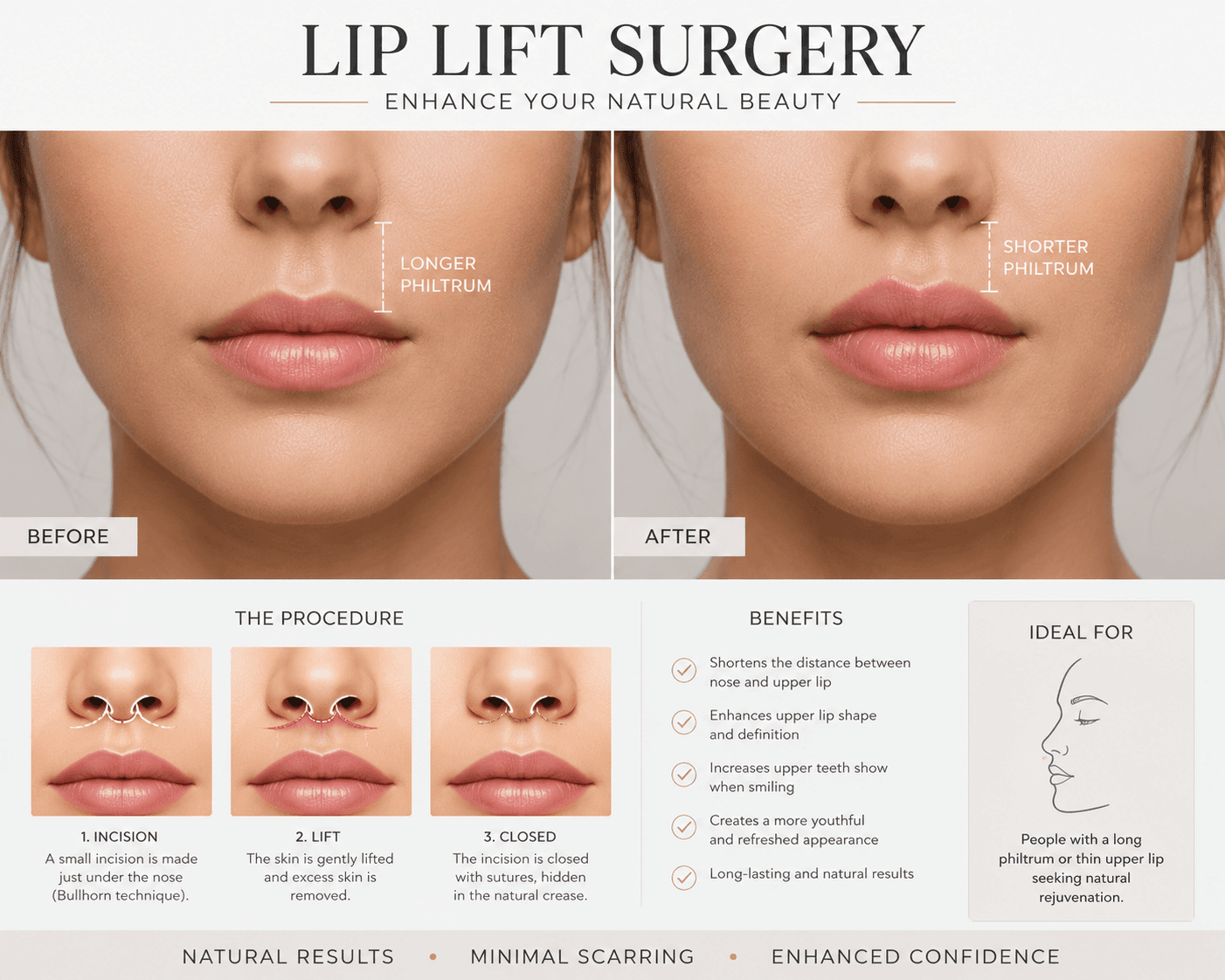
Lip Lift Surgery for Natural Lip Rejuvenation
Lip lift surgery shortens the philtrum for natural, permanent lip rejuvenation. Defined lips, balanced proportions and elegant results without fillers.
Education
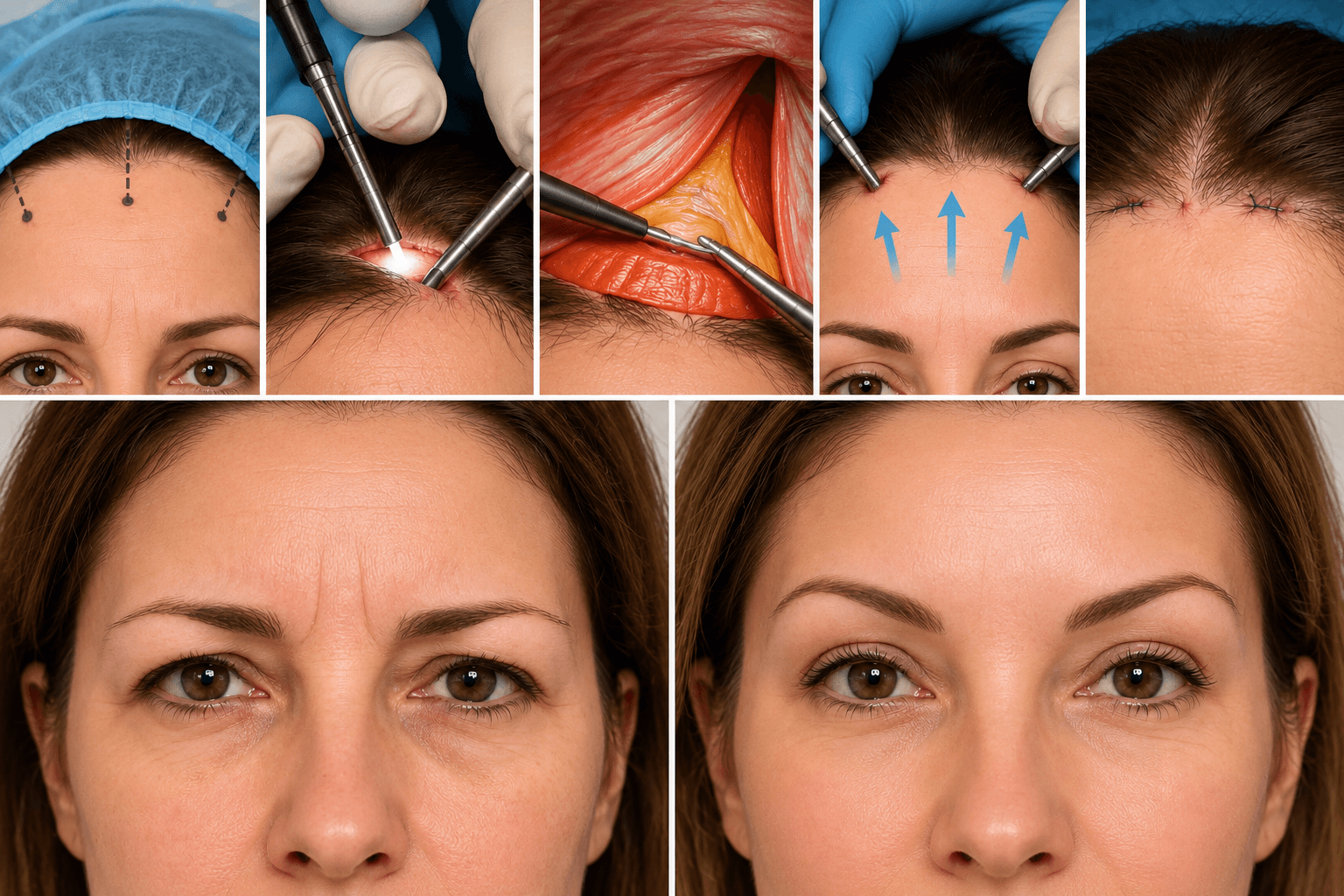
Endoscopic Brow Lift: Procedure, Risks and Recovery
An endoscopic brow lift lifts the brow through small incisions behind the hairline. How it is done, who it suits, the real risks and recovery.

Education
Endoscopic Facelift: Benefits, Procedure, and Recovery
What an endoscopic facelift can and cannot achieve, how the procedure works, what recovery involves, and who tends to be a suitable candidate.