
8 Facial Rejuvenation Methods: Which Is Most Effective?
Facial rejuvenation methods compared: what each of the 8 actually fixes, how long it lasts, and why the most effective one depends on your face.
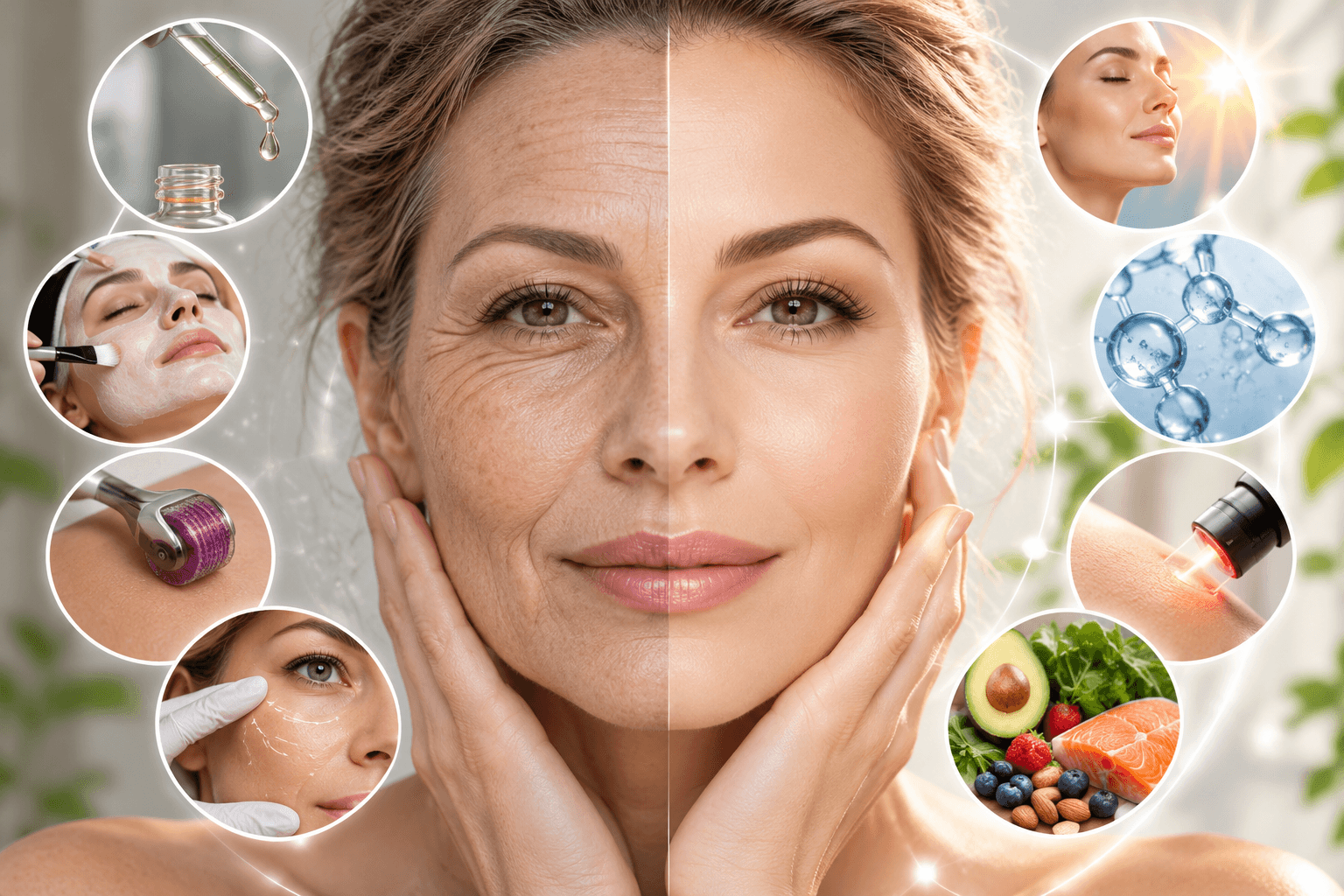
8 Facial Rejuvenation Methods: Which One Is Most Effective?
The honest answer is that the question cannot be answered as asked. Effectiveness is not a property a method has on its own. It is the match between what a method does and what has actually changed in a particular face.
Botulinum toxin is extremely effective against one thing and useless against three others. A deep plane facelift is the most powerful tool available for one problem and the wrong operation for another. Neither is better than the other in the abstract.
So this article does something more useful than naming a winner. It sets out the four things that change in an ageing face. It describes what each of the eight main methods does and does not do. Then it names the most effective method for each of those four changes.
For help working out which group you fall into, the companion piece on who is a good candidate for an endoscopic deep plane procedure approaches it from the other direction.
Why "most effective" has no single answer
Two people the same age can want the same thing, look superficially similar, and need entirely different treatment.
One has good skin, good bone support, and tissue that has slid downward. The other has tissue in roughly the right place but has lost volume, and has sun damage across the cheeks. The first needs repositioning. The second needs volume and skin work. Give either one the other's treatment and the result is poor, no matter how well executed.
That is why rankings of rejuvenation methods are misleading. A ranking implies a single axis. There are four.
What actually changes in an ageing face
Almost everything people dislike about an ageing face belongs to one of four categories. Separating them is the single most useful thing a first consultation does.
Deflation
Fat compartments lose volume and the face loses support from underneath. Temples hollow, cheeks flatten, the area under the eye becomes a shadow rather than a curve. The face reads as tired rather than loose.
Descent
Tissue that was higher is now lower. The ligaments that hold facial fat in place stretch, and the whole soft tissue envelope slides. This produces jowls, a heavy fold at the corner of the mouth, a flattened midface and a lowered brow.
Skin quality
Separate from both of the above. Texture, pigmentation, fine crepe lines, loss of elasticity. A face can have excellent position and volume and still look aged because the surface has changed.
Dynamic lines
Lines produced by muscle movement, deepening over years into lines visible at rest. Frown lines, forehead lines, crow's feet.
Hold those four in mind, because every method below is effective against some of them and irrelevant to the rest.
The eight methods, from least to most invasive
1. Botulinum toxin
Temporarily reduces the pull of specific muscles, so the lines that movement creates soften. Treatment takes minutes and there is no recovery period of any consequence.
What it is effective against: dynamic lines. Within that narrow brief it is the most effective method available, and nothing else comes close.
What it does not do: it does not lift descended tissue, does not restore lost volume, and does not change skin texture or pigmentation. A brow can appear very slightly higher when the muscles that pull it down are relaxed, but that is a small effect and not a substitute for a brow lift.
Duration is usually a few months, after which the effect wears off and treatment is repeated. Details are on the botulinum toxin page.
2. Hyaluronic acid fillers
Injectable gel placed to replace lost volume or to support a specific area. No surgery, minimal downtime, and the material can be partially dissolved if the result is not wanted.
What it is effective against: deflation, in the right hands and in modest quantities. Reversibility is a real advantage and the main reason to prefer filler over fat in a first attempt at volume.
What it does not do: it does not lift. This is the single most expensive misunderstanding in aesthetic medicine. Filler placed to correct what is actually descent adds weight to tissue that has already dropped, and the face becomes heavier rather than higher. Repeated over years, this produces the overfilled look that most patients say they are trying to avoid.
3. Facial fat transfer
The patient's own fat, harvested by liposuction from elsewhere, processed and injected into the face. A surgical procedure, though a relatively minor one, usually combined with something else.
What it is effective against: deflation, more durably than filler. A proportion of transferred fat establishes a blood supply and stays indefinitely. The proportion that survives varies between patients and is not fully predictable, which is why a second session is sometimes planned.
What it does not do: it does not lift, for exactly the reason filler does not. It is also less reversible than filler, since what has survived cannot be dissolved. Information is on the facial lipofilling page.
4. Energy-based skin treatments
Fractional radiofrequency, fractional lasers and related devices. Controlled injury to the skin and the layer beneath it, prompting remodelling over the following months. Usually a course of sessions rather than one.
What it is effective against: skin quality. Texture, fine lines, pigmentation, and a degree of tightening. Within that brief it is the right tool, and no operation improves skin quality the way these do.
What it does not do: it does not reposition tissue, and marketing that suggests otherwise should be read sceptically. Tightening is not lifting. One of the devices used for this is described on the fractional radiofrequency page.
5. Thread lifts
Barbed sutures passed under the skin and anchored, intended to pull tissue upward without an incision.
What they are effective against: very little, honestly, relative to how they are marketed. There is a visible early effect, and for a patient with mild descent who will not consider surgery it is not nothing.
What they do not do: they do not release the ligaments that hold descended tissue down, and they do not reposition the deeper layers. They pull on tissue that is still tethered. The lifting effect is generally measured in months rather than years, and the sutures do not restore what has slid. Anyone being offered threads as an alternative to a facelift is being offered a different and much weaker operation under a reassuring name.
6. Eyelid surgery
Removal or redistribution of excess eyelid skin and, where appropriate, fat. One of the highest-yield operations in facial surgery, because a small change in the eyelid produces a large change in how rested a face looks.
What it is effective against: eyelid skin excess and eyelid fat position. Both upper and lower lids, described on the blepharoplasty page.
What it does not do: it does not raise the brow. This distinction matters more than any other in the upper third of the face. When a heavy upper lid is actually a descended brow, removing eyelid skin treats the symptom and can make the brow sit lower still. Assessing which of the two is the real problem is the reason the upper third is examined before anything is planned.
7. Endoscopic brow and midface lift
Repositioning of the brow, forehead or midface through small incisions, with an endoscope providing the view. The tissue is released, moved and fixed in its new position.
What it is effective against: descent in the upper and middle thirds of the face. For a genuinely descended brow, nothing else is comparably effective, and no injectable approximates it. The relevant pages are the endoscopic brow lift and the endoscopic midface lift.
What it does not do: it does not address the jawline or neck, and it does not improve skin quality. It also does not add volume, so a face that is both descended and deflated needs repositioning and volume together rather than one standing in for the other.
8. Deep plane facelift
Dissection beneath the muscular layer, release of the retaining ligaments and repositioning of the whole composite flap, rather than pulling on skin. The most extensive of the eight, and the one with a real recovery.
What it is effective against: descent in the mid and lower face and the neck. For established jowls and a loose neck it is the most effective method that exists, and the gap between it and everything else is wide. Options are set out on the endoscopic deep plane face lift and full face lift pages, and the technique itself in the deep plane and endoscopic facelift guide.
What it does not do: it does not improve skin texture or pigmentation, and it does not replace volume. It also does not stop ageing. It resets position, and ageing continues from the new starting point.
So which one is most effective?
Asked properly, the question has four answers.
For dynamic lines, botulinum toxin. Nothing else is close, and no operation substitutes for it.
For deflation, fat transfer for durability, hyaluronic acid filler when reversibility matters more. Both are effective; the choice is about permanence and not about power.
For skin quality, energy-based treatment. No operation does this job, and no injectable does either.
For descent, surgery. Depending on which third of the face has dropped, that means an endoscopic brow or midface lift, a deep plane facelift, or both. Nothing non-surgical repositions tissue, and treating descent with anything on this list other than surgery is the most common way a rejuvenation plan fails.
Which is why the useful version of the question is not which method is most effective. It is which of the four changes is doing the most damage in your particular face, because that determines the answer.
The two mistakes that waste the most money
Both come from a mismatch between method and problem, and both are common enough to be worth naming.
The first is treating descent with volume. It is the more expensive of the two, because it does not fail once. It fails slowly, over repeated appointments, each adding a little more weight to tissue that needed lifting rather than filling. The accumulated result is the inflated appearance that is now the main reason people hesitate about aesthetic treatment at all. The article on how natural the result is after an endoscopic facelift deals with this directly.
The second is treating skin quality with surgery. A patient whose real complaint is texture and pigmentation, who undergoes a well-executed lift, gets a correctly repositioned face with the same skin. The surgery was competent and the complaint remains, because the complaint was never about position.
How to judge effectiveness honestly
Effectiveness is not only about how much a method changes. Three other dimensions matter when comparing the eight.
How long it lasts
Botulinum toxin wears off and is repeated. Filler is gradually broken down. Energy treatment improves skin that then continues to age. Surgical repositioning does not reverse, although the face carries on ageing around it. These are different kinds of durability and they are not interchangeable.
Whether it can be undone
Hyaluronic acid filler can largely be dissolved. Botulinum toxin simply wears off. Fat transfer, once it has survived, cannot be removed the same way. Surgery cannot be reversed. The further down the list, the more the decision needs to be right the first time, which is the real argument for a careful assessment rather than for avoiding surgery.
How it ages
The most underrated dimension. A method that looks excellent at three months and strange at three years is not effective, whatever the early photographs show. This is where repeated volume fails and where correctly executed repositioning does well. A face whose tissue is in the right place continues to look like a face as it ages.
Combining methods, and in what order
Most real plans use more than one of the eight, because most faces have more than one of the four changes.
Where several are needed, sequence usually follows the logic of position first. Repositioning changes the shape that volume then has to suit, so adding volume before a planned lift often means paying for volume in a place it will not belong afterwards. Skin treatment is generally kept away from the period immediately around surgery and done once healing is complete.
The important point is not the sequence itself, which varies, but that there is one. A plan in which each step follows from the last is different from a series of individually reasonable treatments with no relationship to each other. The second is how the inflated look happens, and it happens to people who were never once offered anything unreasonable.
What recovery looks like when surgery is part of the plan is set out in the endoscopic facelift recovery timeline.
What none of these methods can do
Worth stating plainly, because it rarely appears in material of this kind.
None of the eight changes bone. Facial skeleton shapes what is possible, and a result is built on the structure that is there.
None of them stops ageing. Every method on the list changes a face's current state, and every face continues from wherever that state is.
None of them produces somebody else's face. A photograph of another person is useful in consultation for showing a style of result, and not for setting a target.
And none of them is a treatment for distress about appearance that is out of proportion to what is visible. That is a real condition, it is generally not improved by surgery, and a consultation that identifies it has done the patient a greater service than any operation would.
Frequently asked questions
Which facial rejuvenation method gives the most dramatic change?
A deep plane facelift, for a patient whose problem is descent in the mid and lower face. It is the most extensive of the eight and produces the largest change in facial position. That is not the same as being the right choice. A face whose problem is skin quality or volume will not be improved by it, however well it is performed.
Can non-surgical treatments replace a facelift?
Not for descent. Injectables restore volume, energy devices improve skin, and neither repositions tissue or releases the ligaments that hold descended tissue in place. They are effective against different problems rather than being weaker versions of the same thing. A patient with mild changes may be well served without surgery for years, which is a different statement from the treatments being equivalent.
Are thread lifts a good alternative to surgery?
They produce a visible early effect, and that effect is generally measured in months rather than years. They do not release retaining ligaments or reposition deeper layers, so they are not a smaller version of a facelift. Being offered threads as a substitute for a lift means being offered a different operation under a familiar name.
What is the most effective treatment for jowls?
Surgical repositioning of the mid and lower face. Jowls are descent, and descent is the one category on this list that non-surgical methods do not address. Filler placed along the jawline can camouflage the transition in a mild case, but it is working around the problem rather than correcting it.
In what order should treatments be done?
Generally position first, then volume, then skin, because each step changes what the next one should be. Volume added before a planned lift may end up in the wrong place once tissue has been repositioned. Where surgery is planned, skin treatments are usually kept away from the period immediately around it.
How long do the results of each method last?
Botulinum toxin wears off after some months and is repeated. Hyaluronic acid filler is gradually broken down, over a period that depends on the product and the area. Transferred fat that survives stays, though the surviving proportion varies between patients. Energy treatment improves skin that then continues to age normally. Surgical repositioning does not reverse, while the face ages around it.
How do I find out which method I actually need?
By having the four changes assessed separately rather than starting from a method. An examination establishes how much of the problem is deflation, how much is descent, how much is skin and how much is movement, and the plan follows from the proportions. What a first consultation should cover is described in the article on the aesthetic consultation.
Arranging an assessment
Dr. Mubariz Mammadli is a plastic, aesthetic and reconstructive surgeon.
The full range of procedures is listed on the treatments page. An appointment can be arranged through the contact page, so that the assessment is done properly rather than by matching a face to an article.
This article is general information and is not a diagnosis or a treatment recommendation for any individual. Which method suits a particular person depends on examination findings, medical history and what that person wants to change. Results, recovery and risks vary between patients. Any treatment decision should follow an individual assessment and a full discussion of the alternatives, including the option of doing nothing.

About the author
Dr. Mubariz Mammadli
Plastic surgeon
Dr. Mubariz Mammadli offers advanced plastic surgery and aesthetic treatments in Bucharest, Naples and Baku, with a refined, patient-first approach.
View full profileRelated treatments
Want a tailored opinion? Schedule a discreet consultation with Dr. Mubariz Mammadli.
Related reading
Aesthetic medicine blog

Education
Facelift in Bucharest: Price, Procedure and Recovery
Considering a facelift in Bucharest? Learn what affects the price, how the surgery is performed, what recovery looks like and how to choose your surgeon.
Education
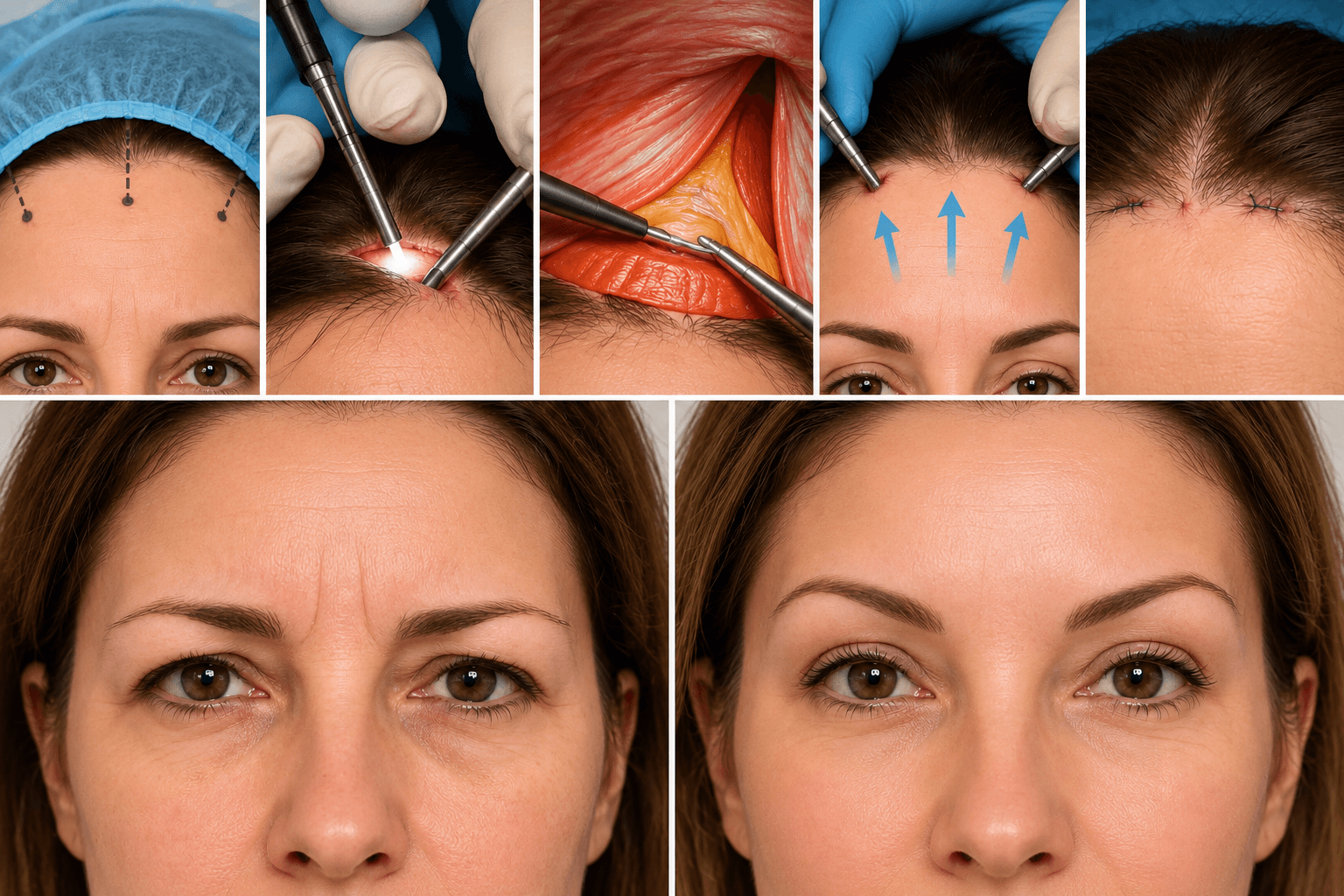
Endoscopic Brow Lift: Procedure, Risks and Recovery
An endoscopic brow lift lifts the brow through small incisions behind the hairline. How it is done, who it suits, the real risks and recovery.

Education
Endoscopic Facelift: Benefits, Procedure, and Recovery
What an endoscopic facelift can and cannot achieve, how the procedure works, what recovery involves, and who tends to be a suitable candidate.